
The AI skin scanner for the “what is this?” moment.
You found something on your skin, and you want a straight answer — not a horror reel. Here’s the exact journey from that moment to an honest first read, in about a minute.
 Try a scan free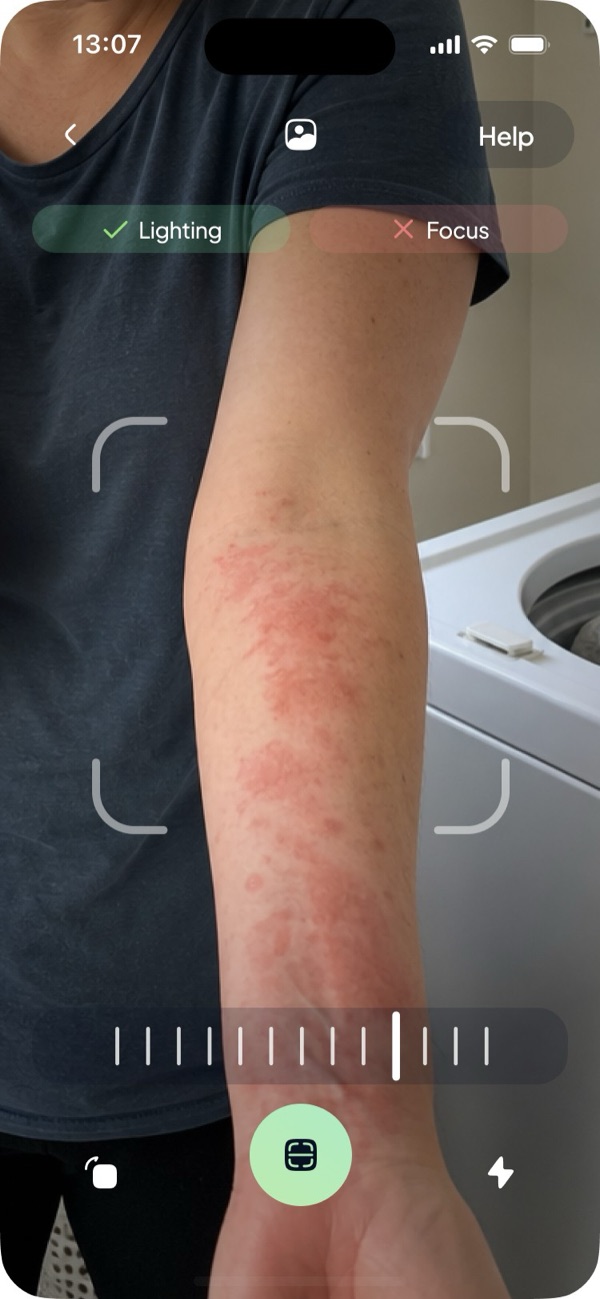
It’s 11:07 PM and your arm has a question you can’t answer.
So you do the thing everyone does: flashlight photo, search bar, forty tabs. And because search results rank by fear instead of likelihood, ten minutes later you’ve diagnosed yourself with something terrifying that looks nothing like your arm. The villain of this story isn’t the rash. It’s not knowing.
You don’t need a hero. You need a guide with a flashlight.
Rash ID has been that first calm look since 2020 — an AI skin scanner trained across 180+ conditions, built to answer the 11 PM question honestly: here’s what it might be, here’s how confident I am, and here’s when to stop scanning and see a doctor.
My daughter had ring worm and this app helped us figure it out when the pediatrician could not! Wonderful app!
Four steps. About a minute. Real screens.
This is the actual app — not a mockup. Scroll and watch the scan happen.
Aim. The camera does the fussing.
A dim, blurry photo gets a bad answer — so the scanner checks your shot while you aim. Lighting and focus flip green as you adjust, brackets center the spot, a zoom dial gets you close. You shoot when the shot is worth analyzing.
Tell it what a photo can’t show.
Does it itch? How long has it been there? Is it spreading? Two rashes can look identical and feel completely different — so the scanner asks what a clinician would ask, and weighs your answers with the image, not after it.
Get ranked matches — no fake certainty.
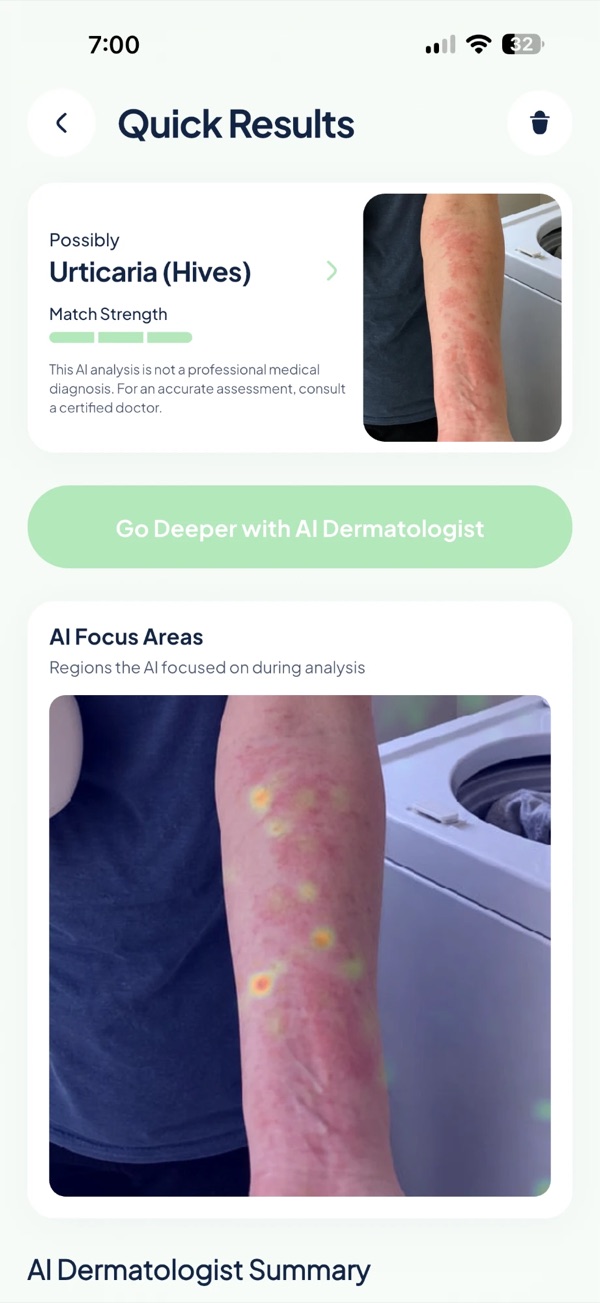
The AI compares your scan against 180+ skin conditions and ranks its closest matches. Every result says “Possibly” — because that’s the truth — with a Match Strength bar instead of fake certainty, and the see-a-real-doctor reminder printed right on the card.
Check its work. Then decide.
No black box: a heatmap of your own photo shows the regions the AI focused on. If it weighed the wrong spot, you’ll see it — and can re-scan. From there MUM, the AI skin guide, explains the match in plain English, and your scan is saved so you can compare in a few days and watch it change.
 “Want me to explain what usually triggers hives — and what would mean it’s time to see a doctor?”
Two ways tonight can go.
One scan changes the story.
And when the answer is “this deserves professional eyes” — you walk into that appointment with photos, a timeline, and the right questions. Empowerment. Not replacement.
What this AI skin scanner is — and what it isn’t
AI skin scanner FAQ
What is an AI skin scanner?
An AI skin scanner analyzes a photo of your skin and compares it against a library of known skin conditions to suggest what a rash, bump, or mark might be. Rash ID pairs the photo with your symptoms — itch, duration, spread — and returns ranked possibilities with an honest confidence level, in about a minute.
How accurate is it?
Honest answer: it depends on the photo, the condition, and how distinctive it looks — which is why every result shows a Match Strength instead of claiming a percentage, and why the scanner coaches your lighting and focus before you shoot. Treat the result as a well-informed starting point to discuss with a clinician, not a verdict.
Is it a diagnosis?
No. Rash ID is an educational tool, not an FDA-cleared medical device. It suggests possible matches and flags when something deserves professional attention. Only a licensed clinician can diagnose a skin condition.
Does it work on all skin tones?
Conditions genuinely look different across skin tones, and the app is built with that front of mind — the condition library describes how each one appears on lighter, medium, and deeper skin. As with any AI skin scanner, a clear, well-lit photo matters most; the live coaching helps you get one.
What happens to my photos?
Your photo is encrypted the moment it leaves your phone, used only to answer your question, and kept in your private scan history — for your eyes only. You can delete every scan, chat, and photo with one tap, and we don’t sell your data.
How much does it cost?
Rash ID is free to download, and new users get a 3-day free trial of Pro — cancel anytime. It’s been on the App Store since 2020, rated 4.6 with 100,000+ downloads.
Your skin has a question. Scan it tonight.
Download free, point the camera, and know more in about a minute than forty tabs would tell you.
 Google Play